
Aug 5, 2026Engineering Whitepapers
Polymer Engineering: Strategic Material Selection for Tier-1 Injection Molding (2026)
2026 Material selection guide. Balancing TCO, thermal stability, and rheology for Tier-1 projects. Avoid over-engineering with JST’s VA/VE logic.
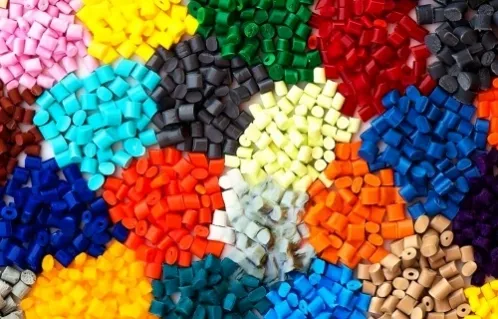
Pick the wrong plastic, and you’ve already lost the game before the mold base arrives. I’ve seen projects stall because a designer picked an expensive PEEK resin where a reinforced PPS would have done the job, or worse—picked a cheap ABS that cracked under chemical exposure. At JST Mold, we recognize that material selection is the cornerstone of DFM. We don't just "pick a plastic"; we execute Material Engineering Validation.
Material Foundation: Choosing the right polymer to balance performance and Total Cost of Ownership (TCO).
Section I: Critical Factors in Material Selection
Choosing the right polymer is a balance of maximizing inherent advantages while mitigating physical limitations. For export-grade tooling, this selection dictates the mold's cooling layout, shrinkage compensation, and steel choice.
1. Ideal Scenarios for Plastic Application
Plastic is the preferred medium when the project requires:
- Mass Reduction: Where light weighting is critical for EV range or portable medical tools.
- Complex Geometries: Parts with intricate undercuts or fine details that demand high-efficiency, high-precision molding.
- Structural Efficiency: Components requiring high strength-to-weight ratios under low-to-medium loads.
- Functional Integration: Applications requiring self-lubrication, vibration damping, thermal insulation, or chemical resistance.
- Multi-Attribute Synergy: Parts that must simultaneously be lightweight, rigid, heat-resistant, and electrically insulating.
2. Constraints and Non-Suitable Scenarios
Plastics should be avoided or heavily reinforced in the following cases:
- Ultra-High Loads: Applications requiring tensile strength exceeding 300MPa.
- Extreme Thermal Environments: Long-term exposure to temperatures exceeding 300°C–350°C.
- Ultra-High Voltage: Insulation requirements exceeding 550kV.
Section II: Performance Requirements and Environmental Adaptation
The goal of professional selection is to maximize performance while minimizing the Total Cost of Ownership (TCO).
1. Environmental Survivability
A part is only as good as its resistance to its working environment. We evaluate:
- Thermal Fluctuations: Ambient vs. peak operating temperatures.
- Humidity & Hydrolysis: Critical for materials like PA (Nylon), which are hygroscopic and may undergo dimensional or degradative changes.
- Chemical Exposure: Resistance to oils, solvents, and cleaning agents to prevent Environmental Stress Cracking (ESC).

Sourcing Quality: Working with global material leaders for specialized automotive and industrial grades.
2. Manufacturing Compatibility
We assess the resin's "Processability" to ensure stable mass production:
- Thermal Stability: Resistance to degradation during the residence time in the barrel.
- Melt Rheology: High-viscosity resins may require specialized gating and high-pressure machines.
Section III: Selecting Materials Based on Functional Application
1. Mechanical Performance Categories
- General Structural Parts: (Bolts, brackets, handles). Low-to-medium fixed loads. Common choices: UPVC, HDPE, PP, HIPS. For higher performance: PA, POM, PC or GF (Glass Fiber) reinforced grades.
- Dynamic/Kinematic Parts: (Gears, cams, bushings). These require fatigue resistance, impact strength, and self-lubrication. Standard engineering plastics include POM, PPO, PEEK, PI, and UHMWPE.
2. Thermal Management
Measured by Heat Deflection Temperature (HDT) and Vicat Softening Point.
Pro Tip: Adding Glass Fiber (GF) or mineral fillers can significantly elevate a material's HDT, allowing lower-cost resins to perform in higher-heat environments.
3. Optical, Barrier, and Electrical Properties
- Optics: Amorphous plastics (PC, PMMA, PS) offer superior clarity.
- Barrier Properties: Critical for packaging. Multi-layer co-injection or specialized coatings (e.g., EVOH) are used to block oxygen.
- Electrics: While PVC is standard for low-voltage, high-frequency/high-voltage applications require PTFE, PI, or PPS due to their superior dielectric strength and arc resistance.
Section IV: Economic Viability and Value Engineering
In the export market, Cost-Competitiveness is non-negotiable. Material costs typically represent 60%–80% of the final part cost.
- Raw Material Optimization: Choosing the right grade to prevent "Over-Engineering" (e.g., using an expensive PEEK where a reinforced PPS would suffice).
- Cycle Time Efficiency: Selecting materials with faster crystallization rates to reduce cooling time and lower per-part processing costs.
- Tooling Longevity: Abrasive materials (like 50% GF reinforced) require hardened tool steels (H13, S136, or D2), which impacts initial investment.
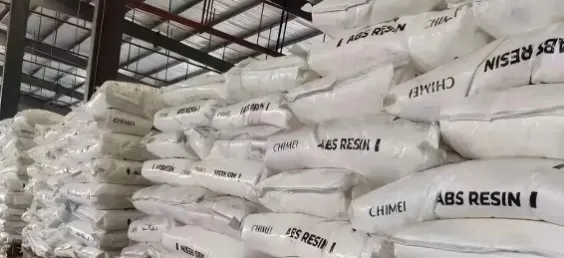
Sourcing Quality: Working with global material leaders for specialized automotive and industrial grades.
Summary: The "Logic" of Professional Selection
Modern selection methods have evolved from "trial and error" to scientific models, including:
- Computer-Aided Selection (CAE/MoldFlow)
- Star-Profile Modeling (Visualizing trade-offs between cost, strength, and heat)
- Value Analysis (VA) / Value Engineering (VE)
JST 2026 Expert Insight:
Don't guess on material compatibility. I’ve seen +/-0.5mm dimensional shifts just by changing resin brands of the same grade. To protect your project, drop your 3D data to us at info@jstmould.com from your corporate email. We’ll perform a professional Material & MoldFlow Consultation to ensure your steel is cut for the right resin.