
Automotive
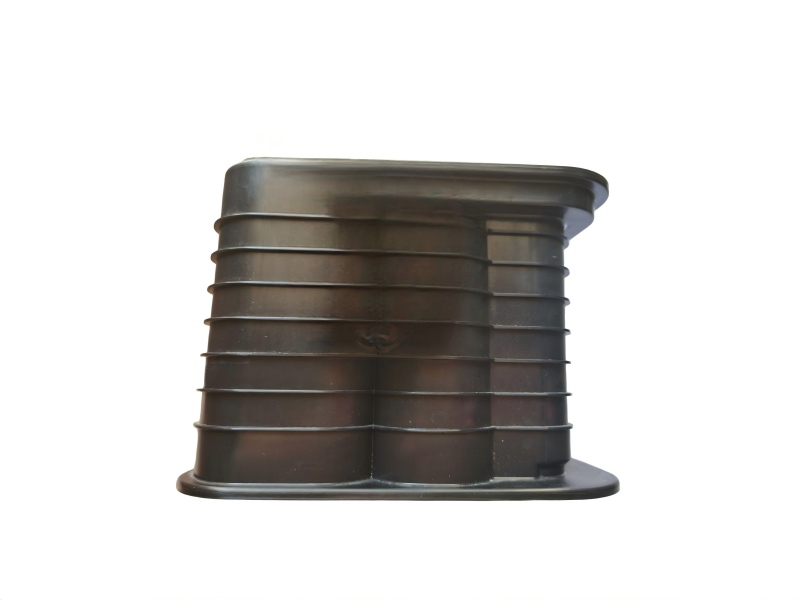
EVAP Carbon Canister Housing | Automotive Injection Molding
Precision EVAP carbon canister housing for automotive vapor recovery systems, with tooling and injection molding focused on sealing integrity, dimensional stability and production repeatability.
Specifications
- Material:
- PA66 / PA12 / HDPE (Fuel-Resistant & Conductive Grades)
- Process:
- Precision Injection Molding (High-Pressure Integrity Execution)
- Mechanism:
- Deep-Draw Core-Pulling / Hydraulic Slides with Precision Guidance
- Tolerance:
- +/- 0.08mm (Strict Sealing Interface & Volumetric Control)
- Surface Finish:
- VDI 3400 Ref. 24-27 (Functional Matte) / SPI-B2
- Mold Steel:
- 1.2344 ESR / 1.2738 (Hardened HRC 48-52 for Dimensional Stability)
- Quality Control:
- Leakage Pressure Testing / CPK > 1.67 / Full CMM Validation
Product Description:
This fuel vapor canister housing is designed for automotive evaporative-emission (EVAP) systems where sealing interfaces, dimensional stability, material compatibility and long-term structural consistency are important.
The housing geometry includes reinforcing ribs and functional interfaces that must remain stable during molding and assembly. For this type of component, tooling and process decisions should be based on the confirmed resin, sealing requirements, internal component layout and production volume.
JST Mould supports similar automotive plastic housing projects from DFM review and mold design through mold manufacturing, trials and dimensional validation according to customer drawings and confirmed project requirements.
Key Engineering Considerations
Fuel vapor canister housings can combine deep geometry, internal ribs, mounting features and sealing-critical interfaces.
During DFM and mold design, key considerations may include:
- wall-thickness distribution
- rib and boss design
- sealing-surface stability
- gate location and filling balance
- shrinkage and warpage
- venting
- cooling layout
- part release and ejection
- material compatibility
- dimensional inspection requirements
The objective is to reduce molding risk before steel cutting and improve dimensional repeatability during mold trials and production.
Material and Mold Design Considerations
Fuel vapor canister housings may use engineering plastics selected according to chemical resistance, thermal requirements, structural stiffness and customer specifications.
Material selection can influence:
- shrinkage behavior
- cavity pressure
- mold venting
- steel selection
- cooling strategy
- expected warpage
- long-term dimensional stability
Where reinforced materials are used, flow direction and fiber orientation may also affect dimensional behavior.
For this reason, the intended production resin should be confirmed as early as possible during tooling development.
Sealing and Dimensional Stability
For EVAP-related housings, dimensional consistency around mating and sealing interfaces is especially important.
Uneven shrinkage, local wall-thickness changes or cooling imbalance can affect:
- sealing-surface flatness
- assembly fit
- internal component positioning
- fastening features
- interface dimensions
Mold design should therefore consider not only whether the part can be filled, but also whether critical geometry can remain stable after packing, cooling and ejection.
Moldflow and Pre-Tooling Review
Where appropriate, Moldflow analysis can support engineering decisions before steel cutting.
Typical review items may include:
- filling pattern
- pressure distribution
- weld-line location
- air-trap risk
- packing balance
- cooling imbalance
- shrinkage tendency
- warpage risk
Simulation should be used as a decision-support tool rather than as a substitute for mold-trial validation.
The final tooling solution should combine simulation, practical mold design experience and actual trial results.
Production and Validation
For production projects, JST Mould develops the mold and molding process around the confirmed annual volume, resin, inspection criteria and validation plan.
During mold trials, the engineering team may review:
- filling stability
- sealing-area dimensions
- warpage
- part release
- visual defects
- cooling repeatability
- assembly fit
- dimensional consistency
The goal is to establish a stable mold and process combination that can repeatedly produce parts according to the agreed customer requirements.
Typical Applications
This type of housing may be used in:
- automotive EVAP systems
- fuel vapor management modules
- vapor recovery assemblies
- related automotive fluid and emission-control systems
If you are developing a fuel vapor canister housing or a similar automotive plastic component, you can send JST Mould your 3D CAD, material specification, annual volume and critical sealing or dimensional requirements for an initial tooling review.