
Injection Molding
Automotive Interior Trim | High-Aspect-Ratio Substrate
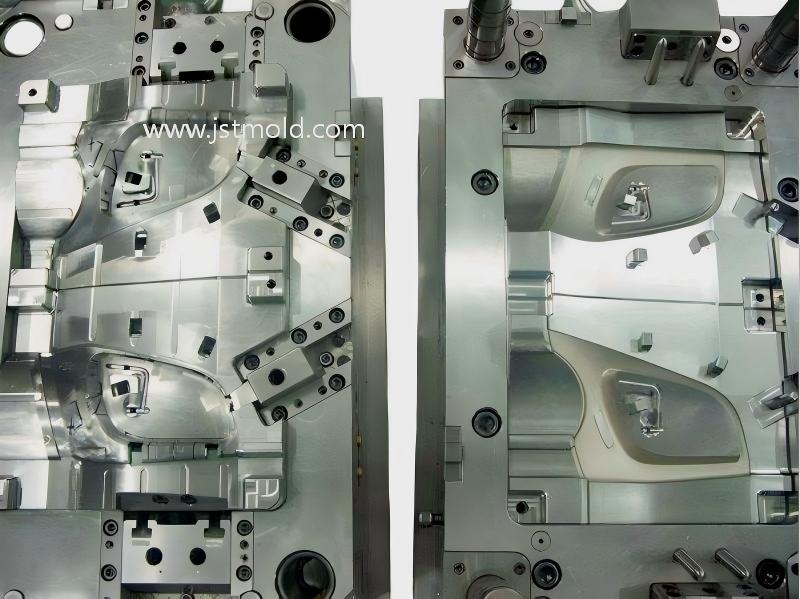
Industrial Brief: Precision-Engineered 2-Cavity Tooling for Technical Automotive Cabin Components | JST Mould Solutions
Specifications
- Material:
- PP+20%TD / PC-ABS (Automotive Grade)
- Process:
- Precision Injection Molding
- Tolerance:
- +/- 0.15mm (Dimensional Stability)
- Surface Finish:
- MT-11010 / VDI 3400 Ref. 27
- Mold Steel:
- 1.2738 (Pre-hardened HRC 32-36)
- Quality Control:
- PPAP Level 3 / 100% CMM Inspection
- Service Scope:
- DFM / Mold Flow (Warpage Control) / Mass Production
Precision Functional Automotive Interior Components | Symmetric Dual-Cavity (LH/RH) Precision Injection Molds with High-Dynamic Thermal Balance Structure Mold Grade
1. SPI Class 101 high-volume export specification with a service life of over 1,000,000 molding cycles, complying with stringent delivery schedules of European and American automotive Tier 1 suppliers.
2. Core Mold Steel
Cavity and core inserts adopt 1.2344 ESR (Electro-Slag Remelting) or high-hardness H13 steel, vacuum quenched to HRC 48–52. Zero parting line wear is guaranteed under long-term mass production cycles.
3. Structural Layout
1+1 symmetric dual-cavity layout integrated with multiple sets of linked long-stroke side sliders and undercut lifter mechanisms, resolving demolding challenges from complex undercuts on automotive interior parts.
4. Hot Runner System
Equipped with high-precision sequential valve gating hot runner system to eliminate weld lines and precisely balance injection pressure across multiple gate points.
5. Cooling Design
Custom high-density conformal cooling channels and beryllium copper inserts are deployed to compensate uneven heat zones caused by inconsistent wall thickness of automotive components. The cycle time is reduced by 15%–20% compared to standard mold designs.
6. Surface Finish
Cavity surfaces are textured to OEM-specified low-stress grain standards (MT or VDI texture ranges). Consistent grain appearance with CPK > 1.67 is maintained throughout high-volume production.
7. Manufacturing Tolerance
Critical mating features are held within ±0.005 mm tolerance, delivering exceptional mold opening/closing stability for fully automatic robotic part extraction operations.