
Injection Molding
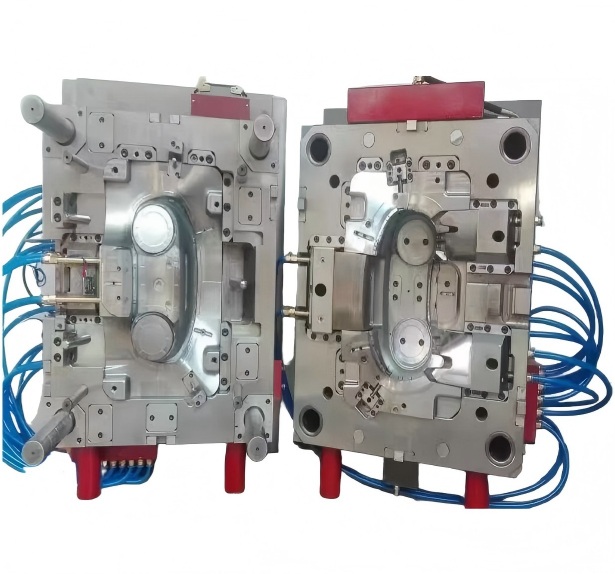
Automotive Center Console Armrest Injection Mold | Precision Tooling
This automotive center console armrest tooling was developed for an interior plastic component where appearance, dimensional stability, side-action release and assembly fit all need to be considered together. JST approaches this type of tooling through DFM, mold-structure review, cooling and ejection planning, followed by mold-trial validation.
Specifications
- Mold Application:
- Automotive center console armrest / interior component tooling
- Tooling Focus:
- Surface quality, dimensional stability, side-action release and assembly fit
- Mold Structure:
- Designed according to actual part geometry, undercuts and release requirements
- Cooling:
- Cooling layout evaluated for thermal balance and warpage control
- Quality Focus:
- Appearance, part release, dimensional stability and final assembly condition
This automotive center console armrest tooling was developed for an interior plastic component where appearance, dimensional stability, side-action release and assembly fit need to be considered together.
For this type of automotive interior tooling, mold design must balance part release, cooling, ejection and dimensional control while protecting visible and assembly-critical areas of the molded component.
Key Tooling Considerations
Automotive armrest components can combine visible surfaces with ribs, clips, local undercuts and assembly interfaces on the B-side. The mold therefore needs to be designed around both part appearance and functional release requirements.
Key engineering considerations include:
- parting-line placement around visible surfaces
- side-action release for local undercuts
- balanced cooling to reduce warpage risk
- ejection layout that avoids part deformation
- dimensional control of assembly-critical features
- mold-trial validation of gap, fit and part stability
Designed for Assembly Stability
For automotive interior components, a molded part should not be evaluated only as an isolated plastic component. Small changes in warpage, clip position or mating geometry can affect gap, flush and final assembly fit.
For this reason, JST reviews tooling decisions together with the final application requirements whenever mating-part or assembly data is available.
Engineering Insight
For a deeper engineering review of surface quality, warpage, side-action design, ejection and assembly fit, read our guide to Automotive Center Console Armrest Injection Mold Design.
Developing a center console armrest or similar automotive interior part? Send us your 3D CAD, material information and key production requirements for an initial tooling review.